
A local PTO just received the invoice pictured below. They recognized this as a scam but I worry that it could fool some people. So let’s get familiar with this:
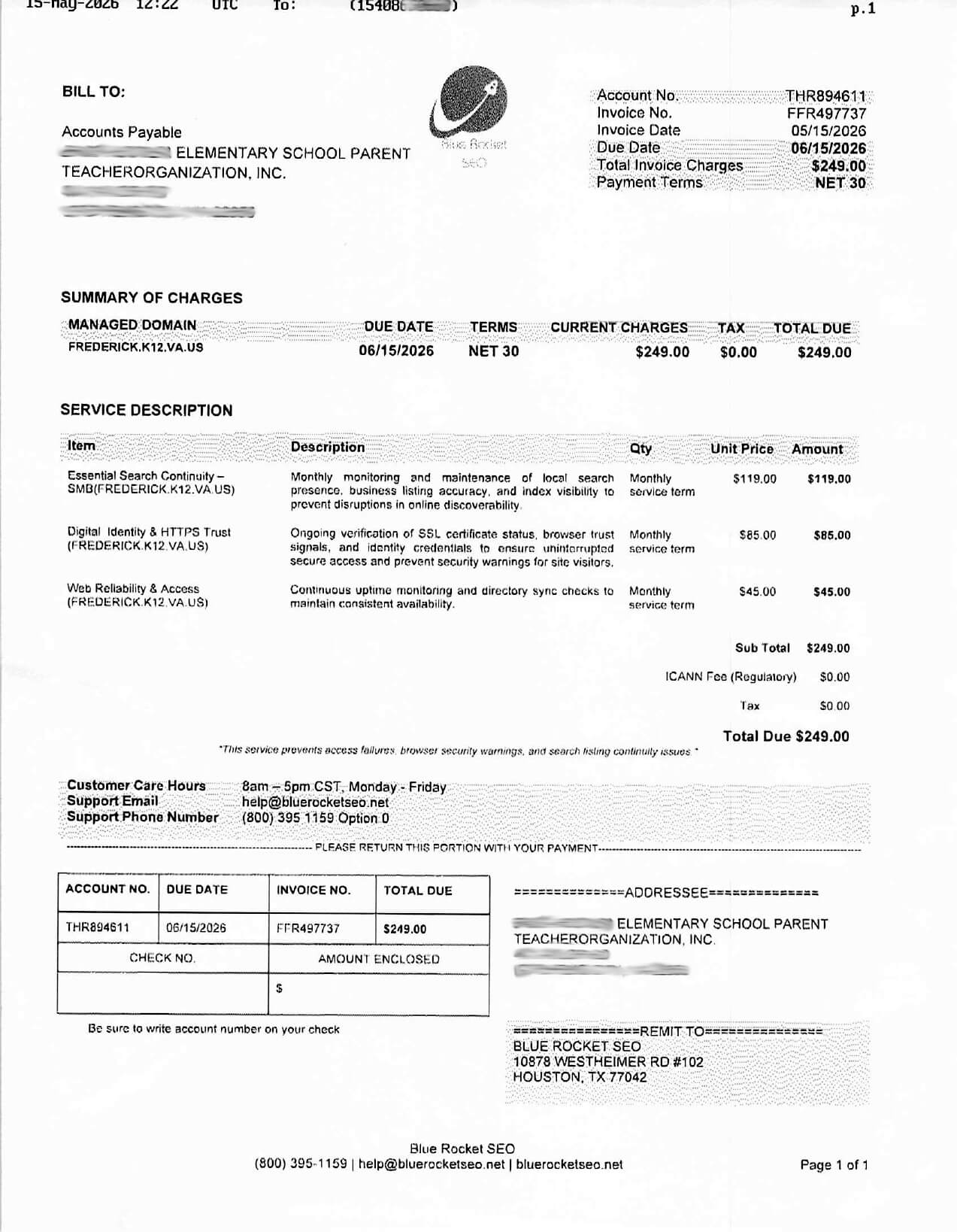
This invoice was faxed to a local public school, and then handed over to the PTO members. It looks like a legitimate invoice, but:
- the PTO has no existing relationship with the sender
- the domain name is wrong and does not exist
- the PTO doesn’t maintain any website or domain
Invoice Fraud
This is just invoice fraud. It looks official enough that some people will be afraid to throw it away. But it’s also clotted with enough tech jargon and buzzwords that readers are likely to glaze over when trying to comprehend its meaning. The goal with this is simply to see who will rubber-stamp this thing and pay it, just to get it off of their desk.
We’ve seen this sort of thing before come to my PO Box. And there are countless more examples out there, as invoice fraud is prevalent and very lucrative. There’s plenty of advice out there on how to avoid these schemes that you should review, if you are in charge of any company finances:
- Business Owners Beware: Invoice Scams Can Reduce Your Profits
- Invoice Fraud Prevention Advice
- How to Avoid Invoice Fraud
Report It?
The final advice that I see on many blogs is that we should report this type of fraud. They recommend reporting it to 3 different agencies: the BBB, the FTC and a state’s Attorney General’s office.
I’m going to do this now, with the invoice I have in hand. I have to make the effort, but I’m already weighed down with a dubious mood. Because earlier, I did some basic Googling on “Blue Rocket SEO”. The BBB apparently already knows about this outfit and has them listed on their “Scam Tracker” page. Countless blogs call them out as scammy. And I can find reports about this particular company, dating back to 8 years ago. They’ve been at this for a long time…
With that in mind, you should choose for yourself if you want to invest the time and effort in reporting invoice fraud.